
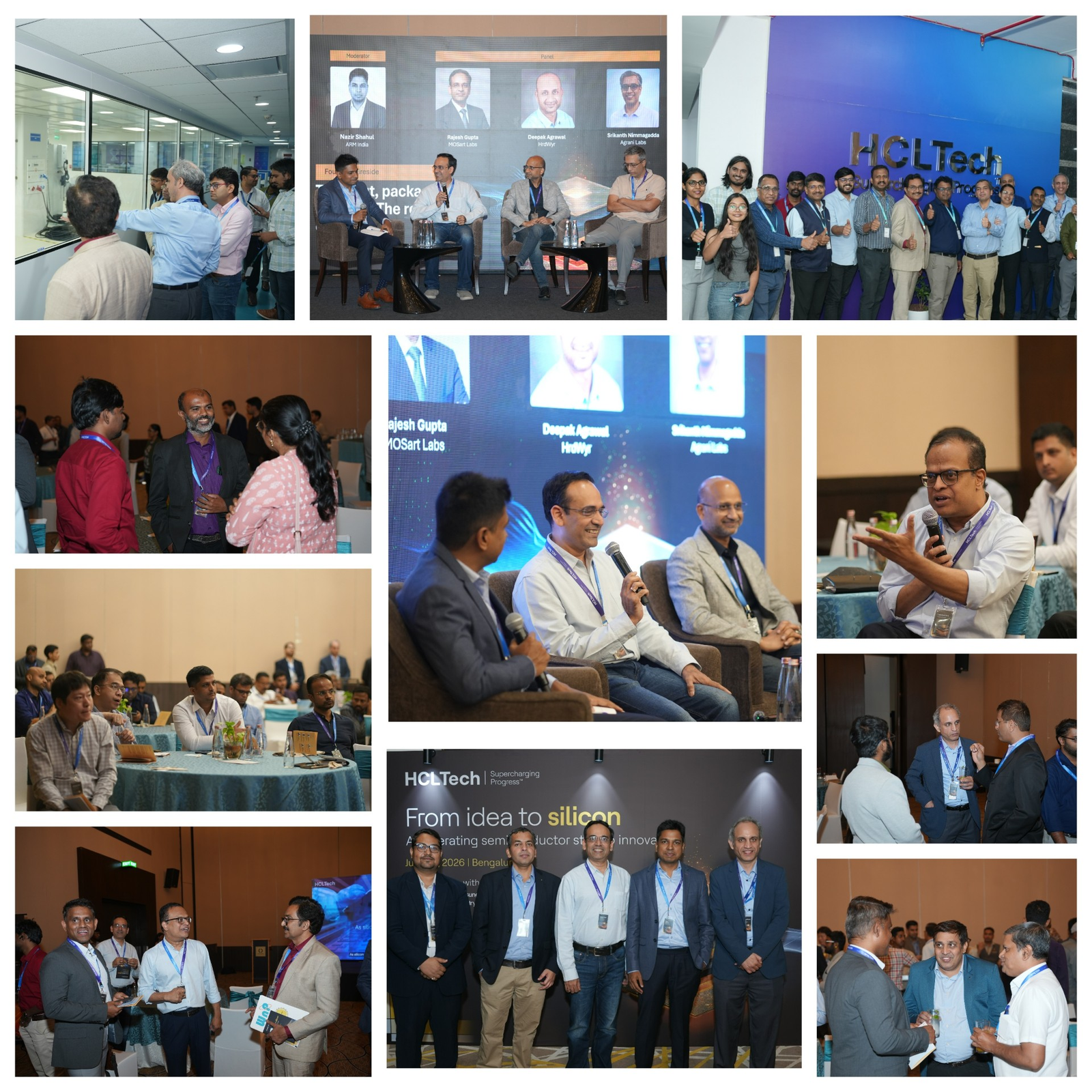
MOSart Semi at HCL Tech & ARM Semiconductor Startup Event
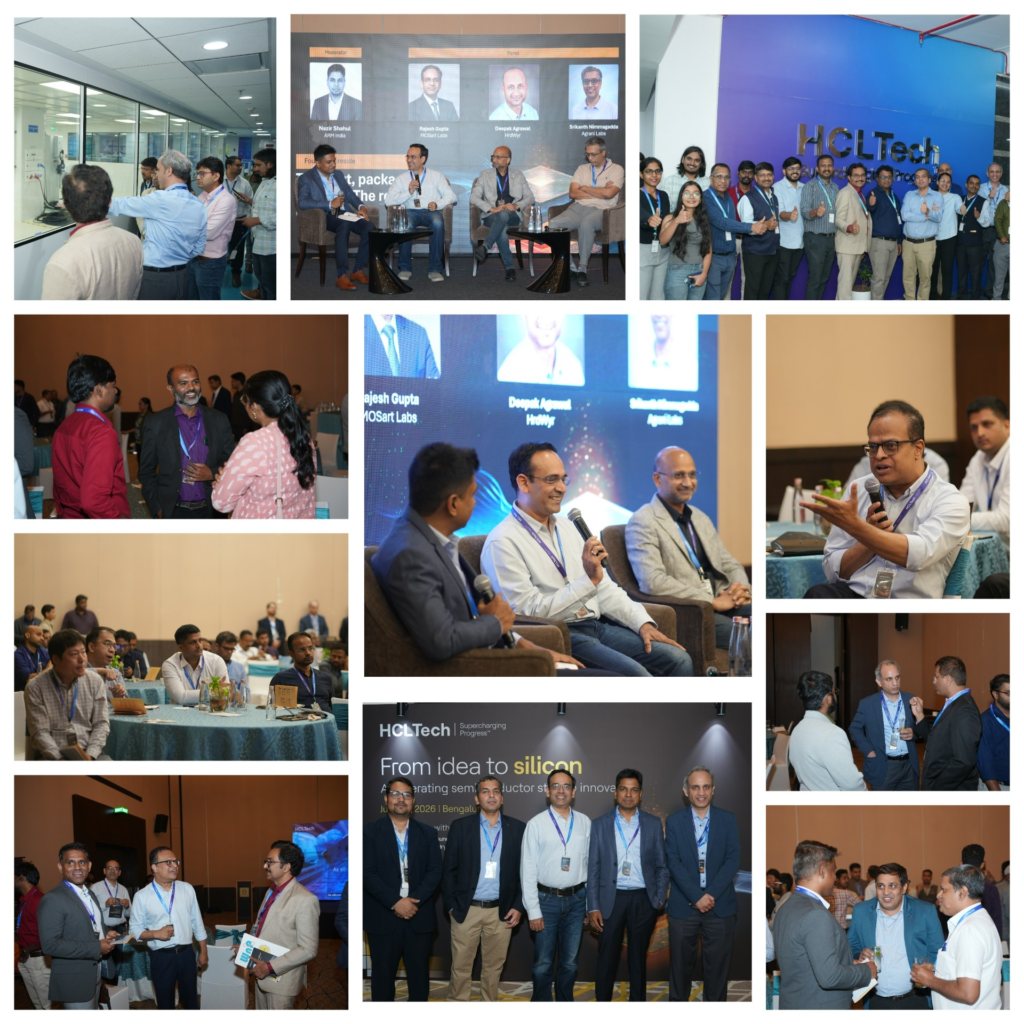
Rajesh Gupta, CEO & Co-Founder of MOSart Semiconductors, participated as a panelist at a semiconductor startup fireside chat hosted by HCL Tech in collaboration with ARM, bringing together fabless startups and MSMEs in the VLSI space.
India’s semiconductor ecosystem is maturing rapidly — and conversations like these are proof of it.
Rajesh N. Gupta, CEO and Co-Founder of MOSart Semiconductors, recently joined two fellow startup founders — Deepak Agrawal and Sri Nimmagadda — on a panel discussion organised by HCL Tech in collaboration with ARM, focused on opportunities, challenges, and strategies for semiconductor startups in India.
What Was Discussed
The fireside chat covered three themes that are front and centre for every fabless startup in India today:
Funding — Raising capital for deep-tech semiconductor ventures remains challenging. Long development cycles, capital-intensive tape-outs, and the need for domain-specialist investors mean that the funding journey for semiconductor startups is fundamentally different from software or consumer internet. The panel discussed strategies for navigating this landscape — including the role of government schemes like DLI, TDB, and state-level fabless policies in de-risking private investment.
AI in Chip Design — The panel explored how AI tools are beginning to influence IC design workflows — from RTL generation and verification to physical design optimisation. For lean startups with small teams, AI-assisted design tools offer a meaningful productivity multiplier, enabling them to compete with larger, better-resourced teams.
Tape-Out Strategy — Go Straight to Product — One of the most practically valuable discussions was around tape-out strategy: specifically, whether to invest in a test chip before committing to a full product tape-out. All three founders on the panel, independently and for their own reasons, chose to go straight to product tape-out — skipping the test chip phase entirely.
Rajesh shared his perspective from decades of industry experience: “A test chip costs significant time and money, and critically, it cannot be designed into a customer’s product. At previous companies, even with large teams and resources, we never did test chips — we went straight to product tape-out with rigorous front-end verification. For a startup, the cost of a test chip round-trip is even harder to justify.”
This approach places a premium on front-end verification rigour — investing 70-80% of design effort in simulation and verification before tape-out, rather than using silicon as a debugging tool.
About the Event
The event was organised by HCL Tech — led by Avik Dasgupta, Apu Datta, and Asif Mohammed — in collaboration with ARM, which also delivered a talk on how ARM engages with and supports startups through its ecosystem programmes. The discussion was moderated by Nazir from ARM.
It was an encouraging signal of how India’s semiconductor ecosystem is strengthening across design, packaging, and post-silicon testing — and the growing community of founders committed to building world-class ICs from India.
About MOSart Semiconductors
MOSart Semiconductors is developing ML1026 — designed to be the world’s first single-chip Battery Management System IC with Tru-EIS, our patent-pending inline Electrochemical Impedance Spectroscopy technology. We are a team of IIT and ams-OSRAM veterans with chips already running in Tesla and BMW vehicles, building the semiconductor layer that will modernise battery management across EVs, BESS, and industrial systems.